Sessions V. Morales-santana Case Brief
Morales-Santana 582 US___ 2017 at 24 n8. Morales-Santana moved to the United States when he was 13.
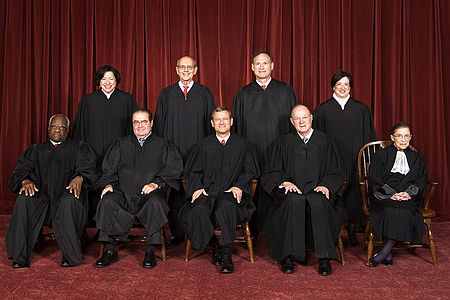
Sessions V Morales Santana Ballotpedia
To avoid deportation he argued that he was a US.

Sessions v. morales-santana case brief. All told the amici offered twenty pieces of. Yet a group of leading population and family scholars and researchers filed a brief as amici curiaein support of respondent. 07082017 On June 12 2017 the Supreme Court decided Sessions v.
At the time the parent was not married yet. However his father was a United States citizen of the year 1917. Congress must instead address that issue in legislationJustice Clarence Thomas wrote an opinion concurring in the judgment in part in which he argued that only Congress could remedy the alleged equal protection violation in this case.
Morales-Santana - Amicus Brief October 3 2016. Citizen and the other is not. Morales-Santana3 the Supreme Court encountered a body of citizenship law that has long relied on family membership in the construction of the nations borders and the composition of the polity4 The particular statute at issue in the case regulates the transmission of.
While their votes helped Mr. Morales-Santana 582 US _ 2017 PARTIES. Because the Court could not grant the relief that Morales-Santana requested the Court should not reach a decision on whether the requirements were.
12062017 An immigration judge rejected Morales-Santanas claim to citizenship derived from the U. 1 The gender line Congress drew in Section 1409 c of the Immigration and Nationality Act -- which creates an exception for an unwed US-citizen mother but not for such a father to the physical-presence requirement for the transmission of US. 12062017 Respondent Luis Ramn Morales-Santana moved to the US.
Morales-Santana is something of a paradox. While living in the Dominican Republic Morales had a son Luis Ramon Morales-Santana defendant. Although his father did not satisfy the requirements for unwed citizen fathers to transfer derivative citizenship he did meet the less stringent requirements for unwed citizen mothers which required physical presence in the.
Long enough to meet the duration requirement of the Acts exception. Morales-Santana formerly known as Lynch v. Morales ability to pass citizenship to his son easily satisfies the requirement that the third party have a close relationship with the person who possesses the right Kowalski v.
Morales-Santana claimed that the citizenship law was unconstitutional because it unlawfully discriminated against men. 09112016 Morales-Santana filed a motion to reopen and argued that the denial of derivative citizenship violated the Equal Protection Clause of the Fifth Amendment. Citizenship of his father and ordered Morales-Santanas removal to the Dominican Republic.
Morales-Santana filed a motion to reopen and argued that the denial of derivative citizenship violated the Equal Protection Clause of the Fifth Amendment. Morales-Santana1 found that a derivative citizenship statute violated an unwed fathers Fifth Amendment due process and equal protection rights by not according him. 10112017 In Sessions v.
Beyond the Mean Remedy JOHN VLAHOPLUS INTRODUCTION The Supreme Courts recent decision in Sessions v. In 2010 Morales-Santana moved to reopen the proceedings asserting that the Governments refusal to recognize that he derived. At the relevant time here the INA required the US-citizen.
09112016 Morales-Santana - SCOTUSblog. The Immigration and Nationality Act INA provides for derivative acquisition of US. The Supreme Court encountered a body of citizenship law that has long relied on family membership in the construction of the nations borders and the composition of the polity.
It is at once a groundbreaking victory for gender equality and a. Citizenship from birth by a child born abroad when one parent is a US. The court of appeals.
Citizenship to a child born. Morales-Santanas case they did little to add to the establishment of true gender equality. Although his father did not satisfy the requirements for unwed citizen fathers to.
The Respondent Luis Ramon Morales-Santana was born in Dominican Republic. Morales-Santana satisfies the requirements for third-party standing in seeking to vindicate his fathers right to equal protection. Citizen because his father though not satisfying the terms of the Acts general rule resided in the US.
Morales-Santana was convicted of several crimes and the United States government plaintiff commenced deportation proceedings. See Brief for Respondent Luis Ramon Morales-Santana Sessions v. Perhaps as men without.
13062017 The Supreme Courts decision in Sessions v. Morales-Santana - Ruling June 12 2017. He applied to have the removal withheld and argued that he had derivative citizenship from his father but the immigration judge denied the application.
Session III Attorney General RESPONDENT Luis Ramon Morales-Santana Facts. 13062017 In a short concurrence the two agreed that SCOTUS lacked the power to wipe away a Congressional statute and were conspicuously taciturn on the issue of whether they believed statutes at issue violated equal protection.

Ginsburg Makes Strides Towards Gender Equality In Sessions V Morales Santana Cumberland Law Review

Lynch V Dimaya Oral Argument C Span Org


Komentar
Posting Komentar